Montessori materials for mathematics are concrete, sensory tools, usually made of wood, that transform abstract concepts into practical, manipulable experiences, allowing children to understand numbers, operations (addition, subtraction, etc.) and geometry through touch, sight and movement, from quantity to symbol, facilitating autonomous, deep and logical learning.
Key principles of Montessori mathematics materials:
Concrete-Abstract: Start with physical objects (e.g. beads, geometric shapes) to simulate notions, then gradually move to associated symbols (numbers), ensuring solid understanding, not just memorization.
Isolation of Difficulty: Each material is designed to isolate a single concept, eliminating confusion (e.g. one set of materials to teach numbers, another for operations).
Error Control: The materials have a built-in self-correction mechanism, allowing the child to check their own work, increasing independence and confidence.
Sensory: Colors, shapes, textures (wood, metal) appeal to the senses and help differentiate properties (size, color, temperature).
Examples of materials:
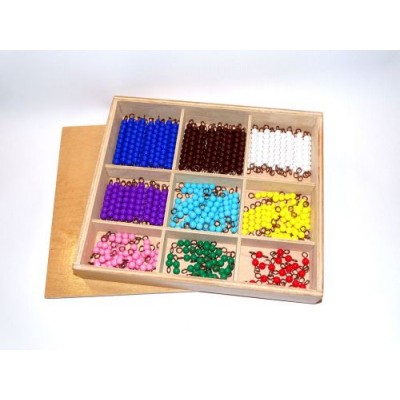
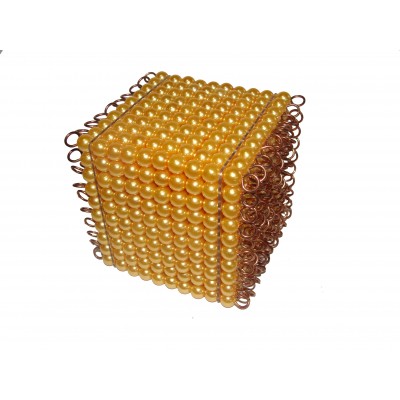
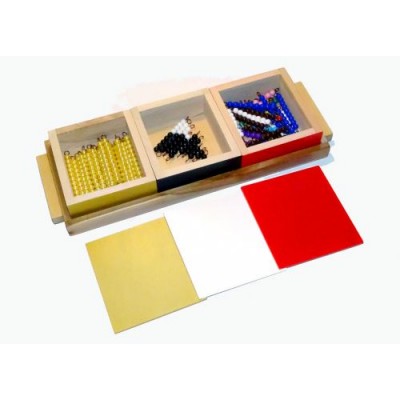
Golden Bead Material: Teaches the decimal system (units, tens, hundreds, thousands) and basic operations (addition, subtraction, multiplication, division).
Number Rods: Long colored rods to visualize the quantity of each number, from 1 to 10.
Geometry Cabinet: Drawers with different shapes to explore sizes, colors and prepare geometry concepts.
Essentially, Montessori materials for math transform math from an abstract subject into a tactile and visual exploration, aligned with children's natural way of learning.









-400x400.jpg "Fraction Circles")
-400x400.jpg "Triangle Insets")