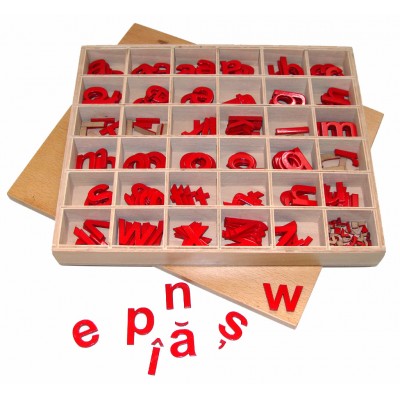
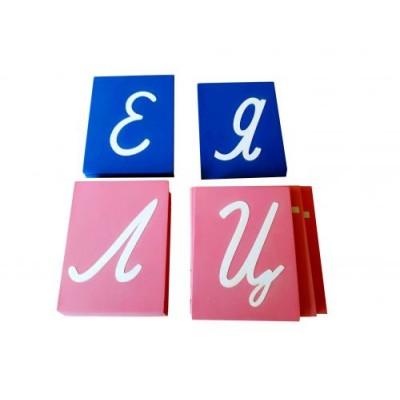
Montessori language materials are concrete, specially designed tools that help children learn to read, write and speak fluently, through sensory activities (textures, colors) and progressive structures that introduce phonics, vocabulary and grammar in a natural way, from sounds to words and sentences, preparing for writing through glass paper letters and reading through the movable alphabet.
What they mean:
Sensory: Glass paper letters (rough texture) help to memorize the shape of the letters through touch, combining the visual with the tactile.
Systematic: They introduce phonetic and grammatical notions in a logical order, from simple to complex, making the abstract concrete.
Self-correction: The materials are often self-evaluable, allowing the child to discover and correct his own mistakes, increasing independence.
Concrete: I use real objects (pictures, labels, cubes) to enrich vocabulary, making learning related to the real world.
Examples of materials:
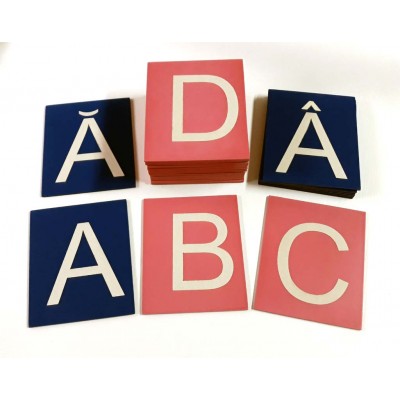
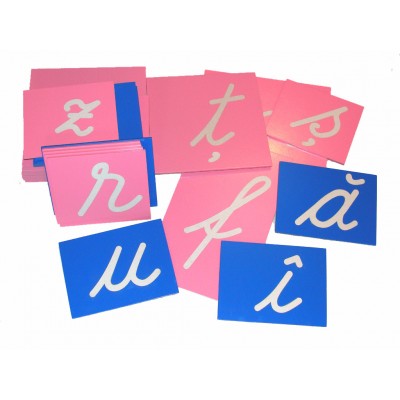
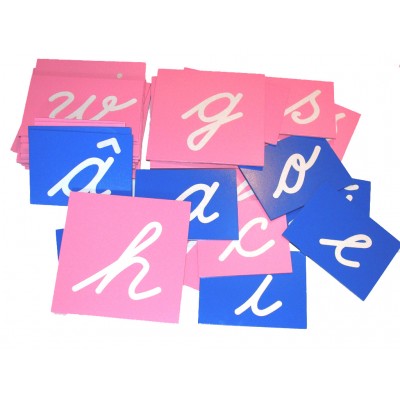
Glasspaper letters: Letters cut out of rough material applied to colored plates, to feel the shape of the letter.
Mobile alphabet: Set of movable wooden letters, which allow the child to form words, preparing for writing.
As producers, we have created the materials related to the language area corresponding to the Romanian alphabet with diacritics and, thanks to the collaboration with external partners, we have created the Greek, Bulgarian, Hungarian, Lithuanian and English alphabets.
The ultimate goal of these materials is to develop clear, rich communication and a deep understanding of language, integrated into everyday life.